Entry · Ref 3I50ONLS
API quota exceeded. You can make 500 requests per day.
- Posted
- 2026-09-26
- Last amended
- 2026-09-26
- Account
- @fencingcompanydkxv804
A fence is among those home improvements that appears uncomplicated till you live through a few installs. You can prepare for the products, select a design that matches your design, and then reality appears in the ground. Soil dampness adjustments how articles established. Frost changes panels. Wind lots reveal weak hardware. If you desire the type of handiwork people brag about long after the professional has actually left the driveway, timing matters just as long as craftsmanship.
I have actually watched the very same crew install 3 "the same" fencings and get 3 really various outcomes because the period was different. The most effective fencing company does not treat setup like a level calendar date. They treat it like a collection of climate and dirt problems with solutions.
Below are functional, real-world seasonal installment suggestions that assist you collaborate with the very best fencing contractors and prevent the costly rework that occurs when presumptions satisfy weather.
Why season transforms the means a fencing performs
Most fences are just as good as their message structures. Messages do not fall short since the wood looks weary or the metal looks thin. They loosen up, turn, rot, or rust since water and freeze-thaw cycles do their work, sometimes silently for years.
Season influences:
- how deep the ground is workable for augers and blog post holes
- whether soil holds moisture in a way that supports solid collection or collapses around a brand-new post
- how rapidly concrete or fast-set mixes cure
- how wind and temperature swings alter panel placement while everything is fresh
If you have actually ever before seen a freshly set up fencing that suddenly looks "off" after a pair weeks, it's normally not appearances. It's activity during curing or growth and contraction while hardware is being tightened.
Spring: strategy early, set up smart, safeguard the foundation
Spring is tempting because everything feels feasible once more. The ground defrosts, crews can access most backyards, and home owners often wish to get tasks "done prior to summer season." The catch is that very early spring can still be careless. The surface area looks practical while the soil listed below is saturated and soft.
In my experience, the most usual spring trouble isn't the fence material, it's the message opening. When dirt is waterlogged, openings can slump know themselves. That can leave a post sitting in a loose sleeve rather than a stable foundation. When wind hits, the whole setting up actions, and also durable rails can end up combating to remain straight.
A good process in spring generally looks like this: wait on the backyard to drain pipes enough that you can dig without tearing the sides of the holes right into mush. If you must mount in very early springtime, award winning fence company expect even more focus on opening security. Making use of the appropriate depth and making sure the hole is clean and compressed around the message can avoid a lot of future settling.
Hardware timing likewise matters. If your fencing is wood, and panels are being attached while the boards are still damp from thaw and rainfall, you can see small modifications as they dry. Those changes are manageable, however they're easier to take care of when the crew has space to adjust, not when everything is currently locked down in a hurry.
Spring organizing habits that help
If you're hiring best fencing installers, ask what they advise for your particular time window. In spring, I prefer to see a slightly delayed start than an install that begins while the ground is still "spring mud." The difference is how the article hole holds shape.
Here's a quick overview to keep the spring mount on course:
- Confirm soil problems and access after a few completely dry days
- Align concrete or set products with temperature level and treating expectations
- Avoid securing equipment fully until panels resolve into place
- Plan for small adjustments as timber adjusts after installation
- Coordinate cleaning so wet conditions don't leave ruts in the lawn
That checklist is purposefully brief due to the fact that the genuine worth is the judgment behind it: excavating just when you can dig correctly, and tightening up only when the fencing has quit moving.
Summer: fast development, expect heat, and don't overlook irrigation
Summer is where teams radiate. The ground is stable, the weather supports treating, and you can generally complete a fence a foreseeable time frame. Property owners likewise take advantage of longer daylight hours. Still, summertime has its own traps.
Heat influences materials and labor in 2 ways.
First, wood and composite boards can relocate as they heat. A fence can look flawlessly square at 9 a.m. And a little different by late afternoon when boards expand. That doesn't imply the fencing is "negative." It implies the crew needs to mount with tolerance and equipment that enables small adjustments.
Second, curing is not practically whether it cures, it has to do with how it cures. Some concrete mixes set much faster in cozy weather condition, but extreme warm can also cause surface area drying out that disrupts appropriate strength advancement if the article collection isn't taken care of well. You don't wish to get creative with water usage unless the installer recommends it, but you likewise do not wish to neglect healing time.
And after that there's watering. I've seen a fencing set up in July and after that an automatic sprinkler kicks on the very first time the homeowner routines summer season watering. If the watering strikes the articles or runs greatly against the fencing line, you can speed up rot on timber fences or corrosion on metal equipment. Even when the fencing itself is fine, the surrounding landscaping can keep the foundation damp.
Summer information home owners typically overlook
A couple of concerns show up extra in summer than in springtime or fall.
One is post spacing and rail positioning when crews are attempting to match an incomplete building line quickly. In stable ground, you can mount properly, yet if you hurry dimensions to defeat the warm, you pay later on with panel spacing that looks uneven.
Another is shade and air movement. A fencing that beings in full sun dries out differently than one backed by trees. That matters most for wood. It also matters for plastic or layered steel if you're utilizing fasteners that can loosen up when temperature level swings create development and contraction.
If you want the most effective fencing company experience in summertime, you desire clear communication concerning what's adjusting and what's taken care of. A specialist installer will explain exactly how they handle small motion without camouflaging problems.
Fall: the pleasant place for long lasting installs in several regions
Fall is frequently the most flexible season for fencing installation, a minimum of in moderate environments. Temperature levels cool, rains patterns normally come to be more secure, and the ground can still be practical for solid article depth without being frozen solid.
That stated, drop timing is every little thing. Set up far too late and frost can get here early. Blog posts established also shallow in ground that starts cold soon can experience heaving pressures. Even if the fence looks penalty initially, you can obtain steady leaning as the freeze-thaw cycle repeats.
The excellent autumn method is to complete the crucial foundation job prior to the weather transforms continually cool. If the very first tough frost hits while your posts are still in the vulnerable duration of curing or initial settling, you're most likely to see movement.
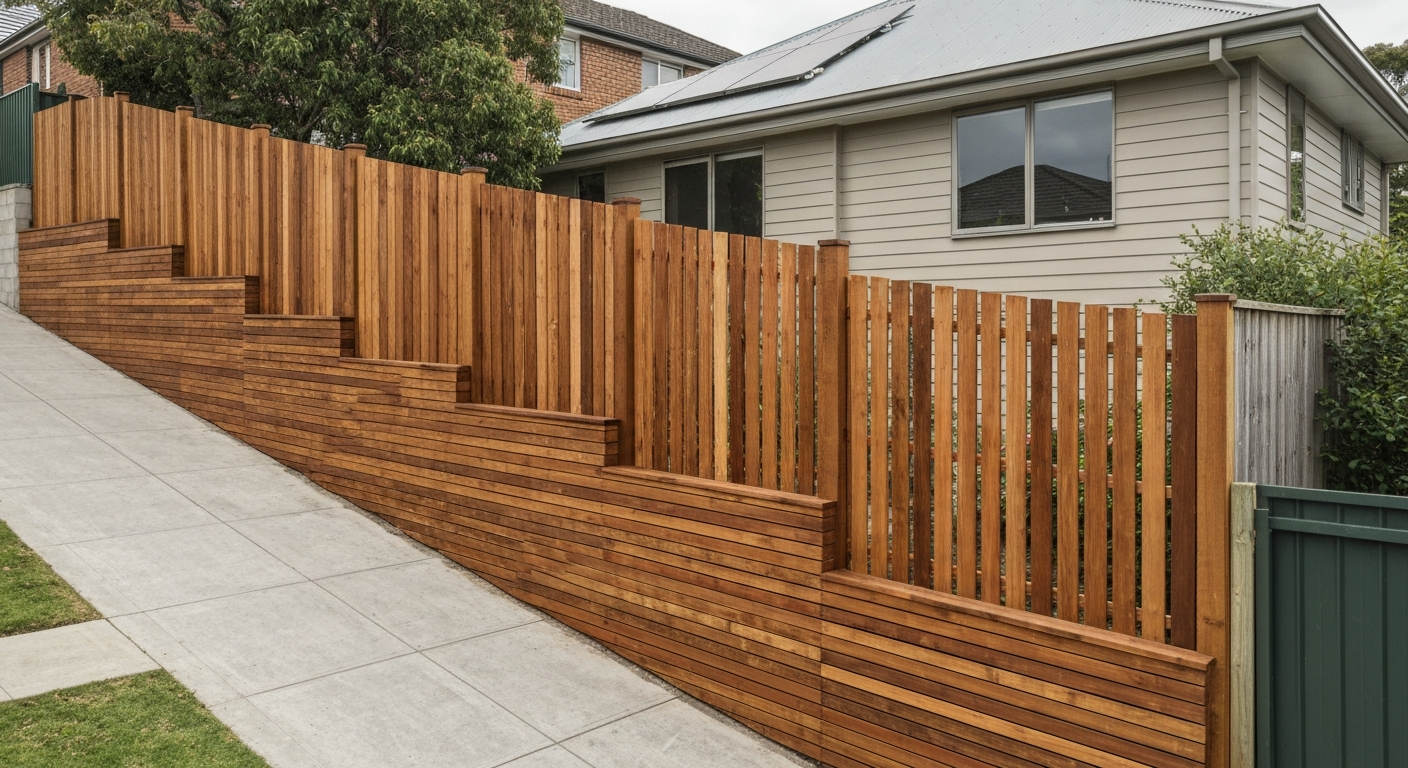
Also, autumn is a heavy vegetation season. Leaves and debris can hide grade problems, create drainage dams, and lead to water merging at the base of articles. If you have a lawn with a slope, late-season clean-up can be the distinction in between water fleing from the fencing versus accumulating along it.
A loss checklist for preparing the mount window
When house owners ask when they need to schedule a fencing, I typically point them to "very early to mid autumn" if the region sustains it. Then I inquire about their dirt, their slope, and whether the lawn stays wet.
Here's a short autumn planning checklist you can make use of when you chat with best fencing contractors:
- Schedule foundation job before consistent nighttime freezing begins
- Ensure the fencing line has drain paths that won't catch runoff
- Confirm post deepness based upon neighborhood soil type and anticipated frost levels
- Avoid leaving half-completed areas that can shift in wind
- Protect fresh concrete or established products from severe cold snaps
In method, the very best fencing installers will certainly change these recommendations based upon what they see at the site. Dirt kind, incline, and the distance to downspouts or drain swales can change the "appropriate" answer even within the same neighborhood.
Winter: normally not suitable, but occasionally practical with the best approach
Winter installs are the exemption, not the plan. In freezing environments, the ground can be hard enough that augering becomes challenging or difficult without specific equipment. Even if a staff can dig openings, you may encounter short curing home windows where freeze threat is too high.
That claimed, "wintertime" is not one thing. Some regions have light winters months with short freezes. Others stay frozen for months. If your local conditions continue to be convenient, a winter season set up can still do well, specifically for metal and vinyl fences where message setting can be managed carefully.
But for wood fences, winter is where I'm most conservative. Moisture administration comes to be complicated, and driving risks and establishing posts can develop stress points in frozen or thawing ground. If you do move forward, you want a staff that treats the foundation job as the priority, not the schedule.
If you're considering wintertime, ask the installer exactly how they deal with message holes, what established products they utilize, and exactly how they shield curing. The right solution is specific, not obscure. If you listen to generalities like "we'll just put and it'll be fine," you ought to pause.
Matching fence type to seasonal reality
Seasonal problems change how specific fence types behave.
- Wood fences are sensitive to wetness patterns. They can hold up beautifully, however post environment issues. Ground that stays wet will shorten the life much faster than lots of people expect.
- Vinyl and composite fences typically broaden and agreement with temperature. Placement matters throughout setup so panels can "locate their location."
- Metal fences, including aluminum, rely greatly on rust resistance at bolts and on correct blog post anchoring. Icy ground and water merging can accelerate issues at call points.
- Chain link fences tend to be functional in numerous climates, yet tensioning and alignment need mindful focus when wind is solid or the ground is unstable.
A strong installation strategy considers what will certainly move and when, after that it builds allocations right into the design and equipment choices. That's where a knowledgeable installer gains their value, not by working quickly, but by working correctly.
Reading the site: slope, soil, water drainage, and prevailing wind
Before you even speak about shade or pickets, your ideal next step is to understand what the fencing line is doing.
Slope changes upload habits. On an professional fencing contractor incline, gravity and runoff can undermine the "uphill" and "downhill" sides in different ways. Drainage identifies for how long the dirt remains damp around your blog posts, specifically after a heavy rainfall. Prevailing wind determines just how much lateral anxiety the fence experiences, specifically for taller fences.
I've dealt with properties where the fencing blog posts were great, but a downspout disposed water directly at the fence base. On paper, the message depth was right. Actually, water undermined the soil around one corner article first, then the entire line moved. The solution wasn't to restore the fencing quickly. It was to adjust drain and provide the structure time to stabilize.
Seasonal installment planning should include that sort of website reasoning. Springtime rainfall, summer irrigation, fall leaf build-up, and winter season snowmelt all modification drain patterns. A fencing set up in the wrong month for your drainage account can act like it has "defects" that aren't truly defects.
Concrete, fast-set mixes, and remedy behavior (without the uncertainty)
Post setup is where house owners usually shed self-confidence due to the fact that they can not see what's taking place inside the hole. That's additionally why installers differ in how they communicate.
An expert staff will certainly speak about their procedure in simple language: just how deep they establish articles, what they make use of, just how they make up temperature level, and exactly how they avoid early stress and anxiety throughout treating. They won't hand-wave.
An usual blunder is presuming that because it's cozy and the fence looks stable, healing is complete. Healing is chemical and time-based, and it can be affected by temperature level and moisture. If the installer pulls braces too soon or connects heavy panels before blog posts have worked out, you can get crooked lines later.
If you're interviewing best fencing company choices, ask about their post-setting operations. You're not searching for a lab record. You're looking for consistency and clear reasoning.
Coordination and defense: what to prepare in advance
Fencing tasks are turbulent, also when the installation itself is reasonably fast. Seasonal problems raise that disruption.
In spring, you secure your lawn from ruts and compaction. In summer, you manage heat, scheduling around the brightest part of the day, and protecting products from buckling when left in extreme sunlight. In loss, you prepare for rainfall and dropping particles. In wintertime, you safeguard the area from getting churned up, and you accept that treating and gain access to can take longer.
You additionally wish to coordinate with next-door neighbors if your fencing line affects common boundaries. Wind-driven particles and setup sound are simpler to take care of when assumptions are clear.
Questions to ask any kind of installer, season included
You can inform a whole lot about an installer from how they handle your season-specific inquiries. The best fencing contractors do not just state yes to an install, they discuss danger and adjustment.
A couple of concerns that have a tendency to emerge real skills:
- How do you choose post deepness based upon my dirt and anticipated weather swings?
- What adjustments in your procedure if we install in early spring versus late summer?
- Do you adjust hardware tensioning for vinyl or composite expansion?
- How do you handle drain near messages so the ground doesn't stay saturated?
- What's your strategy if you hit unforeseen soft places or water in the holes?
If the installer can address these with specifics, you're most likely taking care of the kind of best fencing installers who have actually repeated victories across various periods, not just great outcomes on one sunny day.
Timing recommendations by scenario
Not every home fits the same seasonal advice. Right here are a couple of scenario-based thoughts that match what I have actually seen job best.
If you have a yard that stays damp, autumn or late springtime can be far better than early spring, yet only if the fencing line dries enough to dig easily. If you have a high incline, you want a season where runoff does not transform the area into a network while you're establishing messages. If you're in a cold climate and the ground freezes early, spring and very early fall can be safer windows than mid to late fall.
If you're setting up a taller fencing, wind enters into the structure tale. In gusty summer afternoons, staffs typically like to work early. In fall, gusts can still pick up, especially after storms. The "ideal" period isn't just about temperature, it's about the combination of climate and access.
What to anticipate after installation, relying on season
A fence hardly ever looks "best" on the first day and after that stays completely unchanged permanently. Tiny settling and placement changes are typical, specifically for timber and for any fence built on unequal surface. What matters is that motion is restricted, anticipated, and dealt with or fit throughout the setup process.
Spring installs may take longer to disclose final alignment since moisture and development patterns are energetic. Summertime installs might reveal small changes as materials adjust to the heat and then cool. Autumn mounts commonly resolve even more predictably because temperatures are moderate, yet they can still adjust as rainfall patterns shift. Winter installs, if done whatsoever, might need perseverance due to the fact that freeze-thaw behavior can bring delayed movement if the foundation was vulnerable.
The best fencing company will establish assumptions. They'll tell you what you can see in the very first couple of weeks and what ought to be monitored over the initial season.
The useful bottom line
Seasonal timing is not a marketing detail. It's architectural. A fencing is a long-lasting system, and blog post foundations are where efficiency is decided.
If you desire a fence that stays directly, withstands rot or corrosion, and holds up under wind, strategy your install around ground problems, curing realities, and drain actions. That preparation is exactly where the best fencing contractors and best fencing installers separate themselves from the crews that treat installation like an easy weekend task.
When you book, ask how they handle springtime mud, summertime watering dangers, autumn frost timing, and winter season healing restraints. The appropriate responses will certainly specify to your lawn, not common to the schedule. That's the typical you should anticipate from any best fencing company worth hiring.